The Quiet Quarter: Winning Back Dormant UK App Users Without a PECR Own Goal
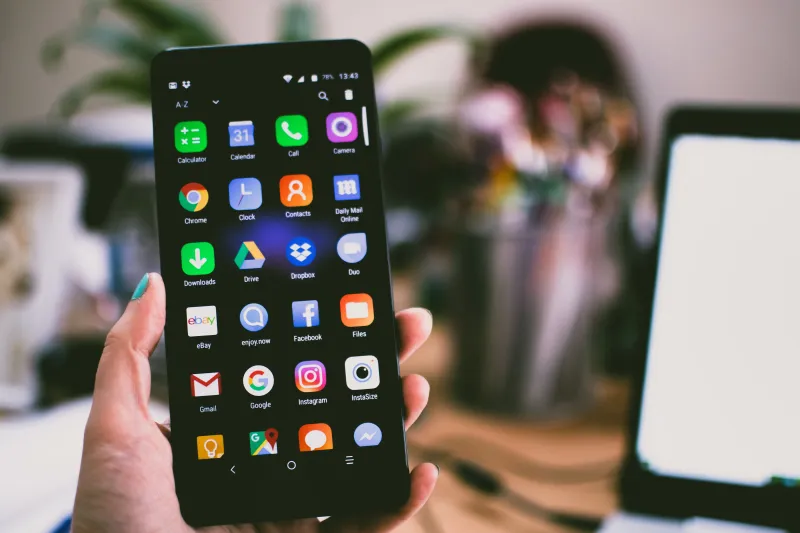
Photo: smartphone push notification on screen at kitchen table UK, via images.pexels.com
Every UK app has a quiet quarter. Not the three months after launch — the users who were once active and then, somewhere between a bank holiday and a busy week, stopped opening the app. They are still installed. They may still have push switched on. And that is exactly where teams get themselves into trouble.
The instinct is to treat anyone who has been inactive for 90 days as fair game. Send them a push. Send them an email. Send them a discount. But dormancy is not consent, and a push permission is not a marketing licence. Under the UK’s Privacy and Electronic Communications Regulations — PECR, usually said with a sigh — electronic marketing still needs a lawful route. If you are planning a win-back campaign for 2026, the practical question is not “how do we get them back?” It is “what are we actually allowed to send, to whom, and on what evidence?”
Start with what dormancy actually means
Dormant users are not one blob. A 30-day quiet spell in a daily utility app is different from 30 days in a holiday-booking app. Before you build a campaign, define dormancy against expected usage. A simple starting point:
- 30 days: cooling. They have missed a couple of natural usage moments. A gentle nudge may be appropriate if you have a lawful basis.
- 60 days: slipping. The habit is weakening. This is where a preference check or a service-led reminder can do more good than a discount.
- 90 days: dormant. The user has not responded to normal lifecycle messaging. Do not assume this is permission to escalate.
Segment by more than recency. Include acquisition source, whether they have a live subscription, whether they have opted out of marketing before, and which channel they actually use. A user who has push enabled but has never opened a marketing email is not the same as a user who has opted in to both. Build the segment in your CRM or app analytics, not in a spreadsheet that goes stale by Thursday.
The permission you have is not the permission you think
This is the bit that catches UK teams. A user tapping “Allow” on the iOS or Android push prompt is giving the operating system permission to show notifications. It is not automatically PECR consent for marketing push messages. PECR covers electronic marketing by push, email, SMS and similar channels. For marketing to an individual, you generally need consent — or the soft opt-in route for existing customers, where you obtained details in the course of a sale, you are marketing similar products, and you offered an opt-out at collection and in every message.
Service messages are different. A password reset, a delivery update, a security alert, a renewal reminder that is genuinely part of the service — these are not marketing. But the moment you add “and here is 20% off your next order” to a service message, you have changed its character. Do not use a terms update or a “we have improved the app” notice as a Trojan horse for a promotion. The ICO has seen that film before.
Design the first wake-up message
The first message after a long silence should not feel like a penalty. It should feel like a useful check-in. That usually means leading with utility, not urgency.
If you have a genuine service reason to contact someone, use it. A saved quote that is about to expire, a subscription that renews soon, a price alert they asked for — these are legitimate reasons to appear. If you do not have a service reason, do not invent one. A re-permission message is honest: “We have not seen you in a while. Do you still want to hear from us about X?” That is a preference question, not a promotion.
For the first touch, keep it small. One question. One action. One clear way out. Avoid the triple-stacked push, email and SMS on the same day. Set a frequency cap you can defend: for example, no more than one marketing touch per user per channel in a 14-day window, and none outside reasonable hours. In the UK, a 9pm push about a gym membership is not a growth tactic; it is a complaint waiting to happen.
Measure whether it worked — not whether it opened
Open rate is a vanity metric for re-engagement. A push can be opened by accident on a lock screen. What you want to know is whether the user came back and did something meaningful. Measure return sessions, task completion, 7-day and 28-day retention after the message, and — critically — negative signals: opt-outs, complaints, uninstalls and deletion requests.
Use a holdout group. If you are sending a win-back campaign to 10,000 dormant users, keep 10% quiet and compare. That tells you whether your message caused the return or whether the user was coming back anyway. It also gives you something sensible to show a product director who wants to “just push everyone”.
Avoid the trap of treating every inactive user as fair game
Suppress the people who have already told you to go away. That means anyone who opted out of marketing, anyone who complained, anyone who deleted their account, and anyone whose consent record is missing or ambiguous. Do not buy a list and import it into your app. Do not pre-tick a consent box. Do not rely on “they installed the app” as a marketing basis.
Keep the evidence. If you are using soft opt-in, record when and how the details were collected and what opt-out was offered. If you are using consent, record what was said and when. A re-engagement campaign is not the time to discover that your consent logs are a rumour.
A routine you can run this quarter
Start with a weekly dormancy report that shows 30-, 60- and 90-day cohorts by channel permission and marketing status. Add a monthly re-engagement review: one service-led message, one preference check, one holdout. Then do a quarterly audit of your suppression rules. It is not glamorous, but it is the difference between a win-back campaign and a PECR own goal.
Dormant users are not a resource to be mined. They are people who once found your app useful and then stopped. The teams that do this well are the ones that ask a simple question before they hit send: would I be comfortable explaining this message, and the permission behind it, to the person receiving it? If the answer is yes, you are probably on the right side of the quiet quarter.